
Green Hydrogen Production Doubled with a Heat-Resistant Nanocatalyst
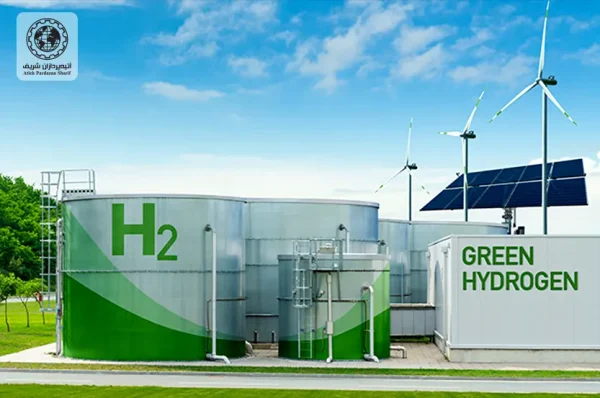
Green Hydrogen Production More Than Doubled
A newly developed nanocatalyst capable of withstanding extremely high temperatures has more than doubled hydrogen production during laboratory testing. The material, developed by researchers at the Korea Institute of Science and Technology (KIST), has the potential to significantly reduce the cost of producing green hydrogen.
Green hydrogen is produced through water electrolysis, a process that uses renewable electricity to split water into hydrogen and oxygen. Currently, the production cost of green hydrogen is approximately USD 5 per kilogram, which is two to three times higher than gray hydrogen produced from natural gas.
To make green hydrogen commercially viable, improvements in water electrolysis technology are essential. This is particularly important for South Korea, where geographical limitations restrict the large-scale deployment of renewable energy sources. A research team led by Dr. Kyung-Jung Yoon at KIST’s Energy Materials Research Center developed a new nanocatalyst for high-temperature water electrolysis. The catalyst is capable of maintaining a current density of more than 1 A/cm² for extended periods at temperatures exceeding 600°C.
To improve both performance and durability, the researchers investigated the degradation mechanisms of nanomaterials under high-temperature conditions and identified the primary causes of catalyst instability. Water electrolysis technologies are generally classified into low-temperature and high-temperature electrolysis. While low-temperature electrolysis (below 100°C) is a mature technology, high-temperature electrolysis (above 600°C) offers considerably higher efficiency. However, commercialization has been limited by poor thermal stability, catalyst degradation, corrosion, and structural deformation.
Conventional nanocatalysts designed for low-temperature electrolysis rapidly deteriorate under high-temperature conditions, making them unsuitable for such applications. To overcome this limitation, the research team developed a novel synthesis technique that prevents the formation of compounds responsible for catalyst degradation. Using transmission electron microscopy (TEM), the researchers systematically analyzed nanoscale phenomena and identified materials such as strontium carbonate and cobalt oxide as the main causes of structural deterioration. By eliminating these compounds, they successfully produced nanocatalysts with outstanding chemical and structural stability.
When applied to a high-temperature water electrolysis cell, the new nanocatalyst increased hydrogen production by more than twofold while operating continuously for over 400 hours at 650°C without noticeable degradation. The technology was also successfully demonstrated in a large-area electrolysis cell, confirming what the research team described as strong potential for commercial-scale deployment and industrial application.