
Seawater Transfer to Central Iran
A Strategic Solution for Sustainable Industrial Water Supply
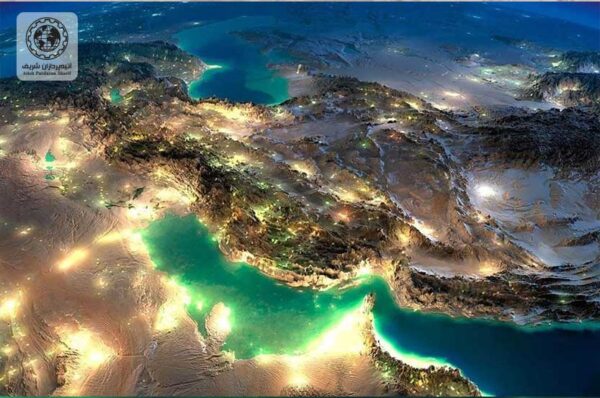
Seawater Transfer to Iran’s Central Plateau
The expansion of drought conditions has led to a severe water crisis affecting drinking water, agriculture, and industrial sectors in several central provinces of Iran. Given the country’s limited freshwater resources, the government has prioritized projects to transfer seawater from the Persian Gulf and the Gulf of Oman to the Central Plateau. According to IRNA Provincial News, water scarcity in Iran has reached a critical stage. In addition to disrupting drinking water supplies, it has halted some agricultural and industrial activities and contributed to increased migration from rural areas to urban centers.
Various solutions have been proposed to address Iran’s water shortage and prolonged drought. However, most of these approaches rely on increasing the use of the country’s already limited freshwater resources, placing additional pressure on existing reserves and accelerating water depletion. Considering the shortage of domestic water resources, proposals to transfer seawater inland have gained momentum in recent years. Iran’s extensive coastline along the Persian Gulf and the Gulf of Oman provides a valuable opportunity to utilize abundant marine water resources for the country’s long-term development.
The severity of drought has forced authorities to prioritize water distribution. Drinking water has been given the highest priority, while industrial water has been assigned the lowest. As a result, the expansion of many large-scale industrial projects has been delayed or suspended due to insufficient water supplies.
To overcome this challenge, major industrial companies have invested in seawater transfer projects. This initiative led to the construction of Iran’s first seawater transmission pipeline in 2020. Additional seawater transfer projects are planned to gradually supply a significant portion of the water required by the water-scarce eastern and central provinces from the Persian Gulf and the Gulf of Oman. This report provides an overview of the physical progress of these projects across the target provinces.
Over 70 Years of Seawater Desalination Experience in the Persian Gulf Region
According to available reports, more than 850 desalination plants are currently operating across the Persian Gulf region, including 25 large-scale facilities with production capacities exceeding 100,000 cubic meters of freshwater per day. Kuwait commissioned the region’s first desalination plants approximately 67 years ago. Other Persian Gulf countries subsequently adopted desalination technology, making it a key component of their long-term water supply strategies.
Seawater Transfer to Central Provinces Began in 2020
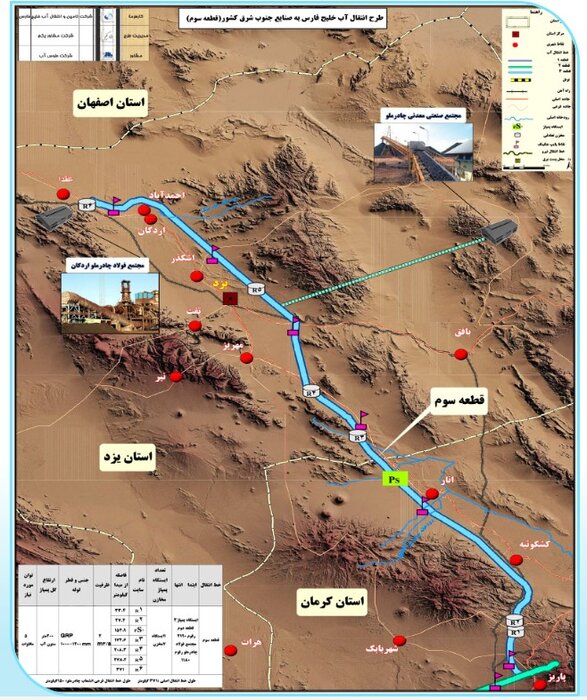
Iran’s first Persian Gulf Seawater Transfer Project, the country’s longest water transmission pipeline, was inaugurated in 2020. Stretching approximately 800 kilometers from west of Bandar Abbas, the pipeline passes through the provinces of Hormozgan, Kerman, and Yazd. The first phase of the project, extending 305 kilometers from Bandar Abbas to Sirjan, was officially inaugurated in November 2020 with an investment of 163 trillion Iranian rials.
The second phase, covering approximately 520 kilometers, supplies water to Sarcheshmeh Copper Complex, Chadormalu Mining and Industrial Company, and Yazd Province. It was commissioned on March 14, 2021, with an investment of approximately 1,200 trillion Iranian rials. According to the national development plan, a second transmission line measuring approximately 1,550 kilometers will eventually be constructed from Hormozgan Province to South Khorasan and Razavi Khorasan provinces, further expanding the country’s strategic seawater transfer network.
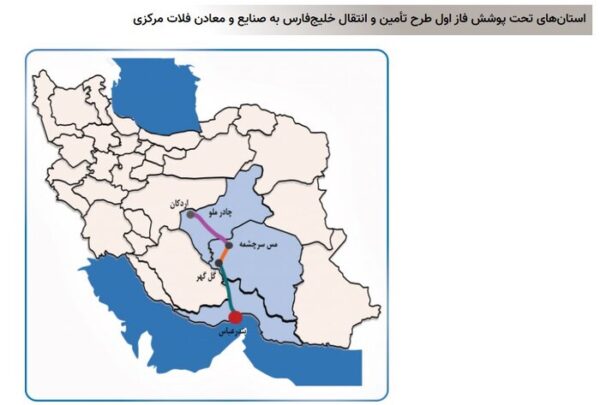
Proposal to Transfer Seawater from the Persian Gulf and the Gulf of Oman to 17 Provinces
According to available reports, due to the country’s severe water shortage, a proposal has been introduced to transfer seawater to 17 provinces in order to meet the growing water demand across various sectors, particularly industry. To date, final approval has been granted for seawater transfer projects serving seven provinces—Hormozgan, Kerman, South Khorasan, Razavi Khorasan, Yazd, Isfahan, and Sistan and Baluchestan. These projects have progressed beyond the planning stage and have entered detailed engineering studies and implementation.
Seawater Transfer Confirmed for Seven Provinces
The seawater transfer project from the Persian Gulf and the Gulf of Oman is designed to provide a sustainable new water source for the seven provinces of Hormozgan, Kerman, South Khorasan, Razavi Khorasan, Yazd, Isfahan, and Sistan and Baluchestan. To implement these projects, approximately 3,700 kilometers of pipelines will be constructed, transporting desalinated seawater from the Persian Gulf and the Gulf of Oman to the designated provinces.
Beginning in the provinces of Hormozgan and Sistan and Baluchestan, the seawater transmission projects will extend toward central and eastern Iran. In addition to supporting the development of greenhouse agriculture, the transferred water will also supply the needs of major industrial and mining facilities, helping to strengthen industrial growth and ensure sustainable water resources in these regions.
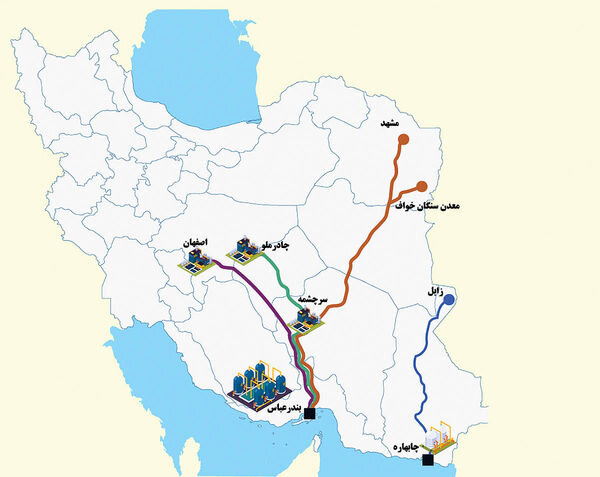
Details of the Four Persian Gulf and Gulf of Oman Water Transfer Pipelines
So far, four major water transmission pipeline projects have been defined to transfer water from Iran’s southern coasts. These projects originate from the provinces of Hormozgan and Sistan and Baluchestan. The first pipeline transfers water from the Persian Gulf to the provinces of Hormozgan, Kerman, and Yazd. It was inaugurated in 2020 and implemented in three phases. The project spans 820 kilometers, includes 12 pumping stations, and was completed with an investment of approximately 20 trillion tomans.
The second pipeline is designed to transfer Persian Gulf water to Kerman, South Khorasan, and Razavi Khorasan provinces. This project extends over 1,550 kilometers and includes 18 pumping stations. With an investment of approximately 47 trillion tomans, it is expected to create employment for around 30,000 people. Although its completion was originally scheduled for 2025, project delays make it unlikely to become operational on time.
The third pipeline will transfer Persian Gulf water to Yazd and Isfahan provinces. The project is 910 kilometers long, includes 10 pumping stations, and has been implemented with an investment of approximately 35 trillion tomans. It is expected to generate employment for 14,000 people. Its completion was also scheduled for 2025, but it is unlikely to be commissioned as planned.
The fourth pipeline is designed to transfer water from the Gulf of Oman to Sistan and Baluchestan Province. This project stretches 820 kilometers, includes 11 pumping stations, and involves an investment of approximately 39 trillion tomans. It is expected to create jobs for 10,000 people. The project was also scheduled for completion in 2025; however, due to existing delays, it is not expected to be inaugurated on schedule.
Industrial Investment in Water Transfer Projects
Estimates indicate that Iran’s industrial sector faces an annual water shortage of approximately 950 million cubic meters. Consequently, the use of seawater has become a necessity for sustaining industrial development. According to experts, surface and groundwater resources should be reserved primarily for drinking water, agriculture, and environmental needs. Therefore, the most effective solution for supplying industrial water is the use of reclaimed water or alternative resources that are not threatened by depletion.
Among the three main water-consuming sectors—drinking water, agriculture, and industry—the industrial sector has the greatest demand for seawater resources. Due to its critical importance, drinking water remains the highest priority in Iran’s water allocation strategy. Accordingly, available domestic water resources are first allocated to drinking purposes, followed by agricultural and industrial uses. Supplying water to major industrial facilities in central Iran has been one of the government’s most significant challenges in recent years. Similar to practices adopted in other countries, seawater desalination and transfer projects have therefore become a strategic priority.
The importance of securing new water resources for industry has encouraged major mining and metal companies to invest in Persian Gulf water transfer projects. As a result, the large-scale water transfer initiative and the construction of the one-million-cubic-meter Bandar Abbas desalination plant—currently the largest seawater desalination and transfer facility in Iran—were implemented with investments from leading mining and metallurgical companies.
Mining and metal companies such as Golgohar, Sarcheshmeh Copper, and Chadormalu, which are among the country’s most water-intensive industries, had faced significant obstacles in implementing expansion projects due to limited domestic water resources. Access to seawater resources now provides these industries with new opportunities for growth and investment.
First Phase of Kerman Water Transfer Project Completed; Second Phase Awaiting Implementation
The Kerman water transfer project was defined in two phases. The first phase was inaugurated in 2020, while the second phase has not yet entered operation. During the first phase, Persian Gulf water was delivered to the province’s major industries, including Golgohar Mining and Industrial Company and Sarcheshmeh Copper Complex. The first section of Phase One included desalination facilities in Bandar Abbas and a 300-kilometer pipeline extending to the Golgohar Mining and Industrial Complex.
The project has a water transmission capacity of 4.4 cubic meters per second and includes seven pumping stations and nine reservoirs with a combined capacity of 185,000 cubic meters. This section was inaugurated in November 2020. The second section of the pipeline, extending 150 kilometers from Golgohar Sirjan to the Sarcheshmeh mining complex, became operational in March 2021. It has a transmission capacity of 3 cubic meters per second and includes four pumping stations and four reservoirs with a total capacity of 80,000 cubic meters.
The second phase of the project, intended to supply drinking water to Kerman and several northern cities of the province, has not yet been commissioned and is currently in the procurement and construction stage. Under the emergency short-term water supply plan for the cities of Kerman and Rafsanjan, the Persian Gulf water transfer network serving southeastern industries will provide a transmission capacity of 1,000 liters per second as part of the northern Kerman water supply project.
The objective of this project is to deliver 30 million cubic meters of drinking water annually to the cities of Kerman and Rafsanjan through the existing water transfer system supplying southern industrial regions. The main transmission line of the project is 145 kilometers long and includes two pumping stations and two storage reservoirs.
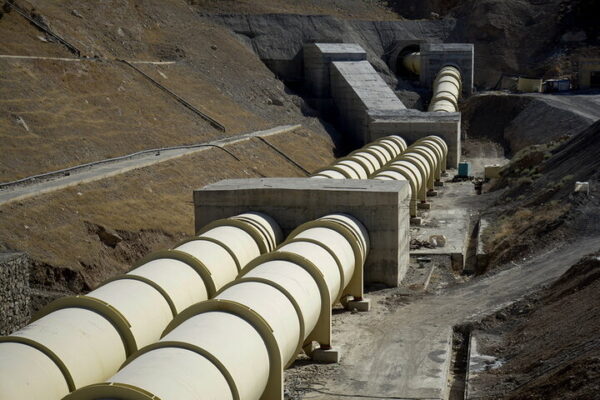
Drinking Water Supply for Cities in Hormozgan Province
Hormozgan Province, as the starting point of the first phase of Iran’s national water transfer pipeline, is utilizing water from this project to supply drinking water to several of its cities.
Approximately 40,000 cubic meters of water were allocated to the province during the first phase. Following the Ministry of Energy’s issuance of a guaranteed purchase permit for 40,000 cubic meters of desalinated water, residents of Khamir County began benefiting from the project. This permit also enabled the use of transferred water in Khamir, Bandar Abbas, and the surrounding villages.
53% Progress in Water Transfer Studies for South Khorasan
South Khorasan is one of Iran’s water-scarce provinces and requires new water resources to support industrial development and drinking water supply. During his visit to South Khorasan, the late President Ayatollah Seyed Ebrahim Raisi emphasized the importance of rapidly securing the province’s water needs through various sources, including water transfer from the Sea of Oman.
Upon arriving in Tabas on September 10 of the previous year, President Raisi told reporters that water scarcity is a major challenge for many provinces and that the government is addressing the issue as a national priority.He referred to both short-term and long-term solutions, stating: “Short-term measures can be implemented within the province, while long-term solutions, such as transferring water from the Sea of Oman, should also be pursued—provided the process does not take so long that people lose hope.”
Mohammad Hassan Asadi, CEO of the Water Supply Company for Industries and Mines and the executive manager of the South Khorasan water transfer project, stated in an interview with IRNA that feasibility and engineering studies for the second Gulf water transfer pipeline to South Khorasan and Razavi Khorasan have reached 53% physical progress.
He added that construction of the second transfer line along the Sharifabad–Torbat-e Heydarieh section (Razavi Khorasan) has achieved 19.6% physical progress, while the Sangan branch (serving Razavi Khorasan and part of South Khorasan) has reached 4% progress. According to Asadi, surveying operations along the entire second pipeline route are 75% complete, while geotechnical investigations in Razavi Khorasan have progressed by 12%.
He explained that the second Gulf water transfer pipeline, extending approximately 1,300 kilometers through Kerman, South Khorasan, and Razavi Khorasan, is planned to supply 230 million cubic meters of water annually by the target year of 2025 (1404 in the Iranian calendar). Of this amount, 60 million cubic meters will be allocated to South Khorasan to ensure a sustainable water supply for the province’s industries.
Asadi noted that 301 kilometers of the pipeline will pass through South Khorasan. Once completed, the project will provide water for the province’s industrial, mining, and industrial agricultural sectors.
Annual Transfer of 200 Million Cubic Meters of Water from the Sea of Oman to Sistan and Baluchestan
Sistan and Baluchestan Province has faced severe drought conditions in recent years. To address this challenge, a major water transfer project from the Sea of Oman has been launched. Speaking to IRNA in Zahedan, the Deputy Governor for Civil Affairs stated that the long-term plan is to transfer more than 200 million cubic meters of water annually to the province, although authorization has currently been granted for 100 million cubic meters per year.
Mansour Bijar explained that the Sea of Oman water transfer project is currently under implementation, with INBASCO serving as the executing company. He added that the seawater intake facility has already been handed over to the company by the General Directorate of Ports and Maritime Organization of Sistan and Baluchestan.
According to Bijar, the transmission pipeline will begin in Chabahar and extend to other cities across the province. Preliminary works on the Zahedan–Iranshahr section have already been completed, while route preparation for the remaining sections is underway. He noted that the project is expected to deliver water to Zahedan within four years. However, depending on construction progress and implementation conditions, water may reach the city earlier than planned. Bijar also stated that project contractors are simultaneously installing intake structures and equipment. If part of the infrastructure becomes operational ahead of schedule, cities located along the pipeline route, such as Chabahar, may begin receiving water as early as next year.
Regarding water allocation, he explained that there are currently no restrictions on distributing the transferred water among industrial, drinking water, and agricultural sectors. At present, priority has been given to industrial consumption. Drinking water allocation will be determined once production costs are finalized and the Ministry of Energy approves a guaranteed purchase agreement. Agricultural water allocation will then be addressed in the subsequent phase.
Allocation of 400 Million Cubic Meters of Persian Gulf Water to Fars Province
According to IRNA’s follow-up reports in Fars Province, the necessary procedures for obtaining a water allocation permit have been completed. Initially, several years ago, a private company applied for an allocation of approximately 200 million cubic meters of water per year and received preliminary approval from the Ministry of Energy.
However, since the required studies and executive operations had not been carried out, the initial allocation permit expired. Provincial authorities later resumed their efforts and successfully secured a new allocation. The Ministry of Energy has now allocated 400 million cubic meters of water annually to Fars Province, which is planned to be transferred through three corridors: eastern, western, and central routes. At present, one private company has obtained a permit from the Ministry of Energy to receive approximately 135 million cubic meters of water per year, which forms part of the province’s total annual allocation of 400 million cubic meters.
Studies indicate that the executive phase of this section has already begun. The first stage involves constructing desalination plants at designated coastal sites. Once desalinated, the water will be transferred to the southern counties of Fars Province, where the majority of the water will be purchased by industrial users, while a smaller portion will be allocated for drinking water.
Part of this 135 million cubic meters will be supplied to the southern counties, while the remainder will be transferred to the central region of the province. Considering the scale and complexity of such infrastructure projects, the final cost depends on regulations, equipment prices, and other implementation factors. Since these projects are being developed by the private sector, the price of the delivered water will ultimately be based on the actual production cost.
Because the water transfer projects are privately financed, consumers will receive water at its full production cost. Seawater desalination is naturally expensive, and industries using this water must ensure that water costs represent only a small proportion of their overall production expenses. Consequently, industries utilizing desalinated seawater will face higher water costs compared to their current water sources.
Several proposals have also been presented to encourage government participation in the project. Under these proposals, the government would finance part of the infrastructure development and the construction of the main transmission pipelines, while the remaining costs would be covered by private investors or end users. This approach aims to reduce financial pressure on industries during the initial phase of the project. In later phases, however, industries will be expected to adopt more efficient water-use technologies to optimize consumption.
The primary objective of the first phase is to supply water to the counties of Lamerd and Mohr through the central transmission route. Subsequently, the eastern and western routes will extend water supply to other parts of Fars Province. From the city of Shiraz toward northern Fars Province, the transmission pipeline will utilize the utility corridor alongside the Shiraz–Isfahan Expressway. If required, and depending on future industrial demand in Isfahan Province, the pipeline may eventually be extended to Isfahan.
The pipeline currently being installed—from Lamerd in Fars Province to Parsian in Hormozgan Province, covering a distance of 67 kilometers—has the capacity to transfer 60 million cubic meters of water annually. Of this amount, 15 million cubic meters will supply Lamerd and Mohr, while part of the capacity will also serve Parsian in Hormozgan Province.
In the next phase, however, the volume of transferred water to Fars Province is expected to increase to 290 million cubic meters annually. According to IRNA’s investigations, the implementation schedule for the Persian Gulf water transfer project to Fars Province depends largely on the level of participation by industries and consumers along the transmission route, as well as the Ministry of Energy’s financial support for purchasing desalinated water. Based on current planning, the majority of the transferred water will be allocated to industrial consumption, supplying major industrial facilities across Fars Province.
In the agricultural sector, only high-efficiency, low-water-consumption agricultural activities are expected to utilize part of the transferred water. A portion will also be allocated for municipal drinking water supplies to cities located along the transmission route. Currently, pipeline installation from Lamerd to Parsian in Hormozgan Province is progressing according to schedule.
Industries in Isfahan Await Water Transfer from Southern Coasts
Construction of the seawater transmission pipeline in Isfahan Province has not yet begun. According to IRNA’s investigations, the primary reasons for the delay since 2020 have been the lack of unified provincial coordination and interruptions in decision-making. Recently, however, officials have indicated renewed momentum for the project. The Deputy Governor for Civil Affairs of Isfahan Province stated that the Persian Gulf water transfer project has not been suspended, but is instead moving forward with greater strength than before.
Mehran Zeinlian emphasized that numerous meetings and negotiations have been held regarding the project. He also noted that appointing a new CEO for Ab Safa Company, which is responsible for transferring Persian Gulf water to Isfahan, is expected to improve project management and accelerate implementation. Former Ab Safa CEO Seyed Mahmoud Hosseini stated that delays resulted from the main project developer, the Persian Gulf Water Supply Company, requesting excessively high prices for delivered water, combined with insufficient high-level supervision.
The current CEO of Ab Safa Company, Farhad Ghaderian, also explained that uncertainty among provincial authorities regarding whether or not to proceed with the project had effectively halted its implementation. Speaking to IRNA, Ghaderian said that although seawater transfer projects to several provinces began in 2020, no consensus was reached in Isfahan regarding implementation. As a result, no physical construction activities have yet taken place. He added that engineering studies have progressed by more than 50%, but no practical work, including pipeline installation within Isfahan Province, has begun.
Regarding the proposed transmission route, Ghaderian explained that if the Gulf of Oman is selected as the water source, the route would extend from the Gulf of Oman through Sirik (Hormozgan Province), Sirjan, Kerman, Shahr-e Babak, Khatam County, Abarkuh County, and finally to the southern part of Gavkhouni Wetland in Isfahan Province, where water would be distributed among industrial users.
If the Persian Gulf is chosen as the final source, the pipeline would extend from Bandar Abbas through Hajiabad, Sirjan, Kerman, Shahr-e Babak, Khatam County, Abarkuh County, and ultimately reach the southern Gavkhouni Wetland before industrial distribution. Regarding project progress, Ghaderian noted that if the shared Sirjan transmission corridor is included, the project has reached approximately 20% overall progress. However, the section dedicated specifically to Isfahan Province remains at 0% physical progress, as no pipeline construction has yet commenced.
The estimated project cost is approximately 500 trillion rials (around 50,000 billion tomans). If sufficient funding is secured, project completion and commissioning were originally planned for 2024, although delays have affected this schedule. According to the CEO of Ab Safa Company, the project is designed to transfer 200 million cubic meters of seawater annually to Isfahan Province, exclusively for industrial use.
Supplying Water to Yazd Province from Both the Gulf of Oman and the Persian Gulf
Yazd Province is expected to secure water supplies for both industrial and non-industrial sectors through two separate sources: the Persian Gulf and the Gulf of Oman. The Persian Gulf Water Transfer Project became operational in 2020, extending the transmission pipeline through Hormozgan, Kerman, and Yazd Provinces, successfully achieving its planned objectives. Under this project, desalinated Persian Gulf water reached the Chadormalu Industrial Complex. A second project, involving water transfer from the Gulf of Oman, has also allocated a water quota for Yazd Province. Feasibility studies are currently underway, although the project has not yet entered the construction phase.
One of the project’s objectives is to provide water to several cities, including Ardakan. Due to the project’s high financial requirements and the inability to secure foreign financing because of international sanctions, the implementation method and financing mechanism have not yet been finalized.
Water Transfer Project to Razavi Khorasan Expected to Be Operational Within Five Years
The desalination and water transfer project from the coast of Chabahar to the three provinces of Sistan and Baluchestan, South Khorasan, and Razavi Khorasan has been introduced as one of Iran’s largest national infrastructure projects. A separate pipeline from Yazd Province to Razavi Khorasan had also been proposed. However, the route extending from Sistan and Baluchestan through South Khorasan to Razavi Khorasan is currently considered the more feasible option.
Construction of the Chabahar-to-Eastern Iran water transfer project began in the second half of 2021. According to the signed agreements, the transferred water will primarily be allocated to industrial and service sectors in Razavi Khorasan and South Khorasan, while in Sistan and Baluchestan it is intended mainly for drinking water supply.
The initial feasibility studies for the project were assigned by Iran’s Ministry of Energy to the Razavi Khorasan Regional Water Company in 2016. The project is being implemented by the private sector through the Iranian Mines and Mining Industries Water Supply Company (IMWASCO). The total investment is estimated at approximately €2.5 billion, and the complete water transfer from Chabahar to Mashhad is expected to take approximately five years.
During the first phase of implementation, the annual water allocation has been defined as:
- 120 million cubic meters for Razavi Khorasan
- 228 million cubic meters for Sistan and Baluchestan
- 60 million cubic meters for South Khorasan
The overall transmission pipeline from Chabahar to Mashhad is planned to extend approximately 1,515 kilometers. Construction is currently underway on the section between Mashhad and Malekabad, while manufacturing of the required pipelines continues in parallel with project execution. Pipeline installation is also progressing on several sections, including:
- The 123-kilometer Malekabad–Torbat-e Heydarieh route
- The 138-kilometer Sangan Khaf–Qaen section
- The 1,800-meter Kameh Tunnel near Torbat-e Heydarieh
At present, approximately 10% of the project has been completed within Razavi Khorasan Province. Across the three participating provinces, however, the overall physical progress of the Chabahar water transfer project currently stands at approximately 2%.